
GPS vehicle tracking that keeps reporting where networks are weak.
Mines, plant yards and long highway routes are where ordinary trackers go silent. SMIPL manufactures its own rugged, dual-SIM GPS tracking devices in India and supplies BIS certified devices — with fuel, driver-ID and engine-data options, a tracking platform with geofencing and reports, and integration with your control room, RFID boom barriers and weighbridges. One partner for devices, platform, installation and CAMC, for PSU, government and industrial fleets across India.
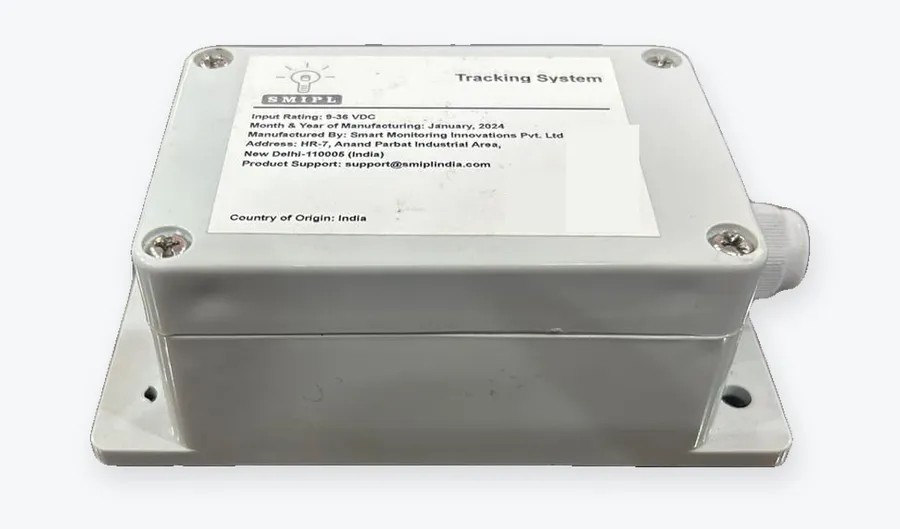
Rugged trackers built for mines, highways and plant yards.
SMIPL makes several tracker models, so the device can be matched to the vehicle, the route and the tender. Features of the SMIPL range:
Dual SIM
Two SIM cards from different operators. If one network is unavailable on a route or at a site, the device switches to the other so data keeps flowing.
Two operators4G with 3G/2G fallback
The device uses 4G where it is available and falls back to 3G or 2G where only those networks reach — common in mines, forests and remote stretches of road.
4G · 3G · 2GSMS support
SMS as an additional communication channel alongside mobile data.
SMSRugged, sealed build
A sealed enclosure with a cable gland and mounting flange for trucks, dumpers and heavy vehicles. Our standard device runs on 9–36 V DC, covering 12 V and 24 V vehicles.
Robust · 9–36 V DCInputs for vehicle status
Digital and analog inputs for signals such as ignition, door, tipper or PTO status, or an SOS button — so the platform knows what the vehicle is doing, not only where it is.
Digital · Analog I/OFuel level sensor
A sensor in the tank reports fuel level, so refuelling is recorded and sudden drops that may indicate fuel theft raise an alert.
Fuel monitoringDriver ID
Drivers identify themselves with an RFID card, so trips, overspeed and idling are reported per driver, not only per vehicle.
RFID driver IDCAN bus engine data
Selected models read engine data from the vehicle's CAN bus. Tell us the vehicle makes and the data you need, and we will confirm what can be read.
CAN · Selected modelsBIS certified devices
SMIPL supplies BIS certified GPS devices. Whoever you buy from, ask for the certificate of the exact model being supplied.
BISOne weak network should not blank out a vehicle.
A single-SIM tracker depends on one operator's coverage along the whole route. Dispatch trucks from a mine often cross areas where one operator is strong and another is weak, and pit areas or valleys may have only 2G. A dual-SIM device with network fallback works like this:
SIM 1 · primary operator
Uses the best network available on this SIM.
SIM 2 · second operator
Takes over when SIM 1 has no usable network.
What to put in your specification: dual SIM with automatic switching, fallback to lower network generations, and storage of positions on the device when there is no network at all, with automatic upload when coverage returns — so the route history has no gaps.
Fuel, driver and engine data: what advanced tracking can add.
Location answers "where". Fleet and dispatch managers also need to know how a vehicle is being used. These are the main data sources an advanced GPS tracking system can connect to:
| Data source | What it gives you | Typical use |
|---|---|---|
| GPS positionStandard | Location, speed, heading, distance | Live tracking, route history, geofences, overspeed |
| Digital and analog inputsAvailable | Ignition, door, tipper/PTO, SOS button and similar signals | Unloading at the wrong place, idle time, emergency alerts |
| Fuel level sensorAvailable | Tank level measured independently of the vehicle's own gauge | Refuelling records, fuel theft and drain alerts |
| RFID driver IDAvailable | Which driver is driving | Driver-wise trips, behaviour and accountability |
| CAN bus (SAE J1939)Selected models | Engine data such as total fuel used, fuel level, engine speed (RPM), engine hours and distance; on many vehicles also engine fault codes | Fuel consumption per trip, engine-hour based maintenance, early fault warning |
| OBD portOn request | Diagnostic data on cars and light vehicles, such as speed, RPM and fault codes | Light fleets, staff cars, service vehicles |
SAE J1939 is the CAN communication standard used on most heavy trucks, buses and off-road machinery; fault codes are carried in its diagnostic messages (DM1). Which parameters can be read depends on the vehicle make, model and what the manufacturer exposes on the bus — always confirm on a sample vehicle before fleet-wide rollout.
Fleet visibility, not just dots on a map.
A vehicle tracking system is only useful when someone acts on it. SMIPL sets up the platform, alerts, reports and integrations that make tracking part of daily operations.
Live location and playback
Position, speed and ignition status of every vehicle on one map — road or satellite view — with trip history and route playback.
Live · HistoryGeofences and places
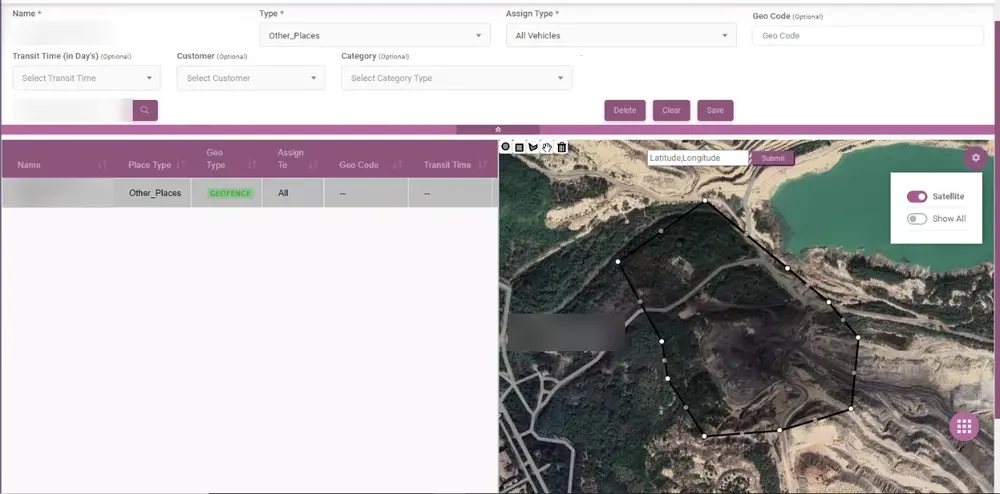
Loading points, stockyards, weighbridges and destinations drawn as polygons, circles or rectangles, assigned to all or selected vehicles, with expected transit time and customer.
Geofence · RouteAlerts
Route deviation, unauthorised stops, geofence entry and exit, overspeed and device alerts — sent to the right person, not just shown on a screen.
ExceptionsFuel and driver reports
Fuel filled and consumed, suspected drains, idle time, overspeed and driver-wise performance, where the sensors are fitted.
Fuel · DriverTrip and audit reports
Trip, distance, halt and exception reports for operations, audit and vigilance teams.
Reports · AuditICCC integration
Vehicle positions on the same GIS map as CCTV cameras, RFID gate events, ANPR and weighbridge data in the command centre.
ICCC · GISFrom the device in the vehicle to the control-room screen.
Built for fleets that carry value or risk.
Coal and mineral dispatch
Track dispatch trucks from loading point to weighbridge to destination, and match movement with RFID boom-barrier and weighbridge records to stop diversion.
Mining · DispatchHeavy equipment and tippers
Engine hours, idle time, tipper status and fuel use for dumpers, tippers and other heavy vehicles, to plan maintenance and control fuel.
Fuel · Engine hoursPSU and industrial fleets
Staff buses, service vehicles and logistics fleets for power plants, factories and large campuses, with driver-wise reports.
PSU · IndustryCritical asset movement
Monitored movement of convoys and high-value or sensitive consignments, with exception alerts to the control room.
Security · LogisticsWhat to put in a GPS vehicle tracking tender or purchase order.
Clear specifications get comparable bids and a system that keeps working after installation. Points worth stating:
| Area | What to specify |
|---|---|
| Device | BIS certificate for the exact model offered, rugged sealed enclosure, input voltage range for your vehicles, internal backup battery, ignition sensing, tamper and power-cut alerts |
| Connectivity | Dual SIM with automatic switching, 4G with 3G/2G fallback, SMS support, storage of positions when there is no network, SIM and data plan responsibility |
| Sensors and inputs | Number of digital and analog inputs, fuel level sensor, RFID driver ID, CAN bus data (list the parameters needed) |
| Reporting interval | How often positions are sent while moving and when parked |
| Platform | Hosted or on-premise, number of users and roles, map layers, geofences, alert types, report formats, data retention period |
| Integration | APIs to the ICCC, RFID gates, weighbridges and dispatch systems |
| Installation | Concealed, tamper-resistant fitting, wiring standard, vehicle-wise acceptance test |
| Maintenance | CAMC period, device health monitoring, replacement time for faulty or damaged devices, spares, uptime reporting |
One partner from survey to years of uptime.
Departments and PSUs buy through GeM and open tenders; industry buys direct. SMIPL works with both — and as a project partner for EPC contractors.
Fleet and route survey
Vehicle types, routes, network coverage, loading points and the reports each team needs.
Device selection
The right SMIPL tracker model and sensors — fuel, driver ID, inputs or CAN — matched to the vehicles and specification.
Installation
Concealed, tamper-aware fitting and power wiring, tested vehicle by vehicle.
Platform setup
Geofences, routes, user roles, alert rules and scheduled reports configured.
CAMC
Device health checks, replacement of damaged units and support.
Tracking that works where the roads end.
Our own devices, made in India
SMIPL manufactures its own tracking devices, so models, inputs and features can be matched to the requirement and supported directly — no waiting on an overseas vendor for spares.
Maintained a Coal India vehicle tracking system
Comprehensive maintenance of WCL's GPS/GPRS vehicle tracking system, including supply and installation of replacement GPS devices against damage, so dispatch vehicles stayed visible on the map.
Delivered across seven SECL mining areas
Automatic boom barriers, GPS devices and weighbridge positioning systems supplied across seven South Eastern Coalfields mining areas.
Tracking joined to the command centre
SMIPL builds the ICCCs that bring GPS, CCTV, RFID and weighbridge data into one view.
Hardware, software and maintenance under one contract
Devices, platform, installation, integration and CAMC from one accountable partner.
Vehicle tracking questions buyers actually ask.
What is a GPS vehicle tracking system (VTS)?
A VTS uses a GPS device fitted in each vehicle to report its position, speed and status over the mobile network to a tracking platform. Operators see every vehicle on a live map and get alerts for route deviation, unauthorised stops, overspeed and geofence entry or exit.
What is a dual-SIM GPS tracker?
A dual-SIM tracker holds SIM cards from two mobile operators and switches automatically when one network is unavailable. SMIPL's dual-SIM devices also fall back from 4G to 3G or 2G, which keeps vehicles reporting in mines, forests and remote stretches of road.
Can a GPS tracker detect fuel theft?
Yes, with a fuel level sensor fitted in the tank. The platform records refuelling and raises an alert when the level drops suddenly while the vehicle is parked or off route. SMIPL supports fuel level sensors with its tracking devices.
What is CAN bus data in vehicle tracking?
Most heavy trucks, buses and machinery share engine data on a CAN bus, usually using the SAE J1939 standard. A CAN-capable tracker can read data such as total fuel used, engine RPM, engine hours and, on many vehicles, fault codes. What is available depends on the vehicle. SMIPL offers CAN data on selected device models.
Are SMIPL's GPS devices certified?
Yes. SMIPL supplies BIS certified GPS devices. Whoever you buy from, ask for the certificate of the exact model being supplied and check that the device meets the tender's technical specification.
Does SMIPL make its own GPS devices?
Yes. SMIPL manufactures its own tracking devices in India, in several models, and supplies them with the tracking platform, installation, integration and CAMC.
What does a vehicle tracking system cost?
Price depends on the number of vehicles, device model, sensors such as fuel or driver ID, SIM and data plan, hosted or on-premise software, integrations and the CAMC period. Share your fleet size and requirements for a costed proposal.
Can GPS tracking be integrated with an ICCC?
Yes. In an ICCC, vehicle positions appear on the same GIS map as CCTV cameras, RFID gate events and weighbridge transactions, so dispatch movement can be checked end to end.
Do you provide CAMC for an existing vehicle tracking system?
Yes. SMIPL has carried out comprehensive maintenance (CAMC) of Western Coalfields' GPS/GPRS vehicle tracking system, including supply and installation of replacement GPS devices against damage.
Can you supply against GeM or tender specifications?
Yes. Government departments and PSUs buy through GeM and open tenders. SMIPL proposes devices and software that match the tender's technical specification. SMIPL is based in New Delhi and works across India.
New fleet, tender or existing system — start a conversation.
Share your fleet size, vehicle types, routes and what you need to see — location, fuel, driver or engine data. SMIPL will respond with a proposal for devices, platform, integration and CAMC, anywhere in India.