
AI video analytics for CCTV: use cases, camera requirements and how we deploy it.
AI video analytics watches camera feeds and raises an alert when something specific happens — a person without a helmet, an intrusion at night, smoke at a stockyard, a loaded truck at the wrong gate. SMIPL designs, deploys and operates analytics with ten event types in live operation across the coal sector's first AI-enabled ICCC. This page explains how it works, where it pays off, what your cameras need and how to test it before you commit.
Ten event-types.
Up to five per camera.
Each analytics model is tuned for the operational context — mining, logistics, safety, perimeter or environmental — and deployed at scale across diverse site conditions.
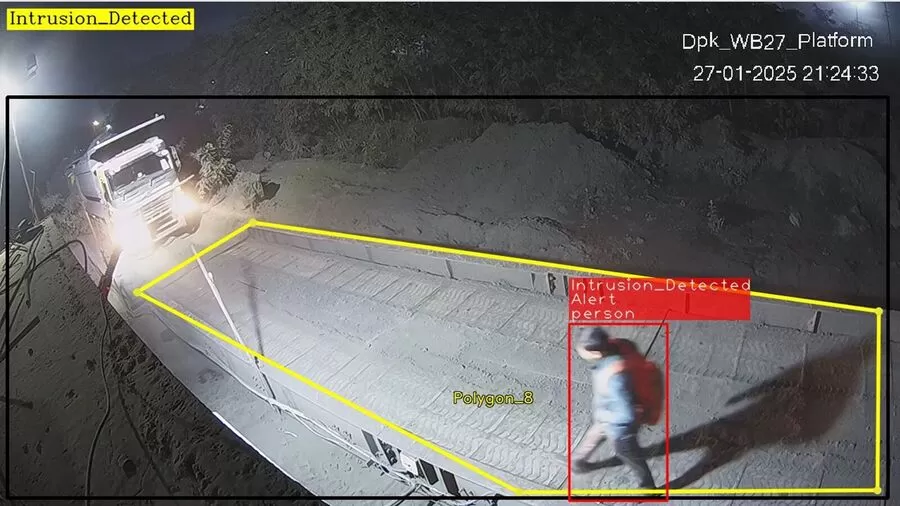 Alert · Intrusion
Zone Intrusion Detection
Geofenced polygon-based intrusion alerting for restricted zones. Night-vision tolerant. Distinguishes people, vehicles and wildlife. Deployed at mine-perimeter, magazine storage and after-hours logistics zones.
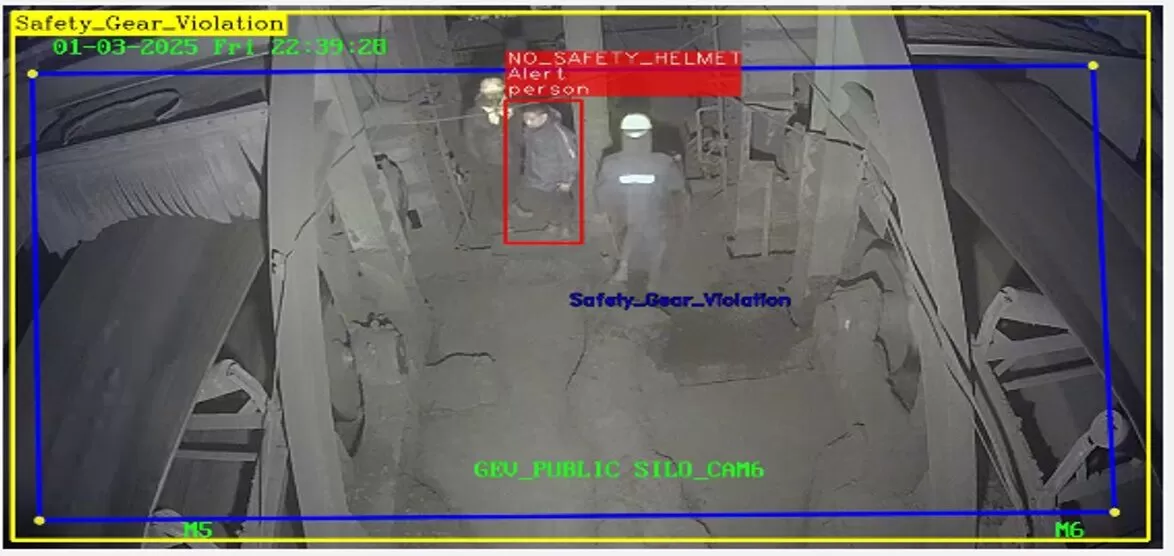 Safety · PPE
PPE Violation Detection
Real-time helmet, high-visibility-vest and safety-gear compliance monitoring. Low-light capable. Generates auditable incident log for site-safety reporting and DGMS compliance documentation.
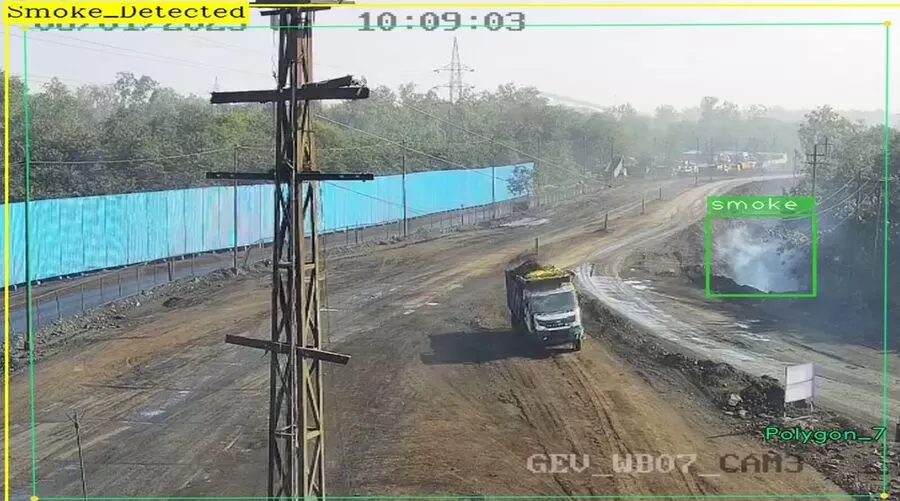 Env · Smoke
Smoke & Fire Recognition
Early-stage smoke plume detection — activates before traditional sensors trigger. Trained on dust-heavy coalfield environments to minimise false positives from natural haze and vehicle emissions.
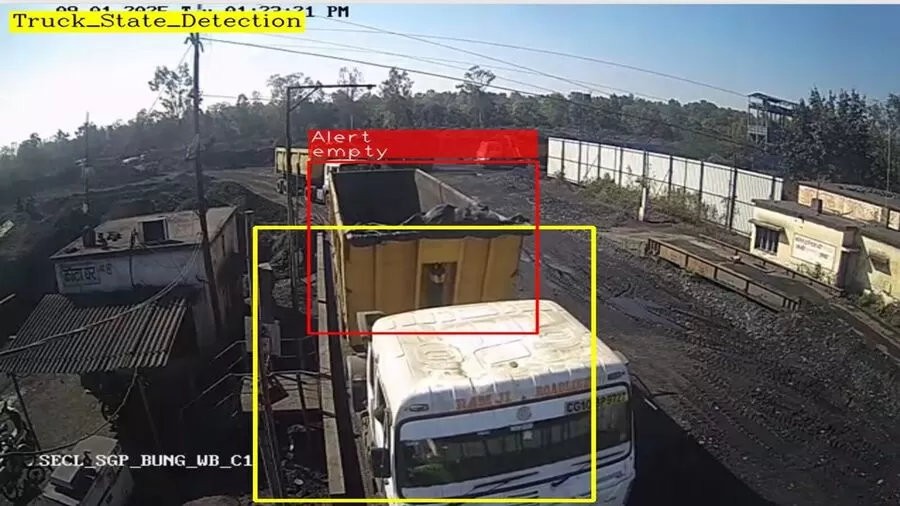 Ops · Logistics
Truck-State Detection
Classifies loaded vs empty state at weighbridges and siding entry points. Correlates with RFID and weighbridge data to flag discrepancies — a core anti-pilferage and dispatch-integrity control.
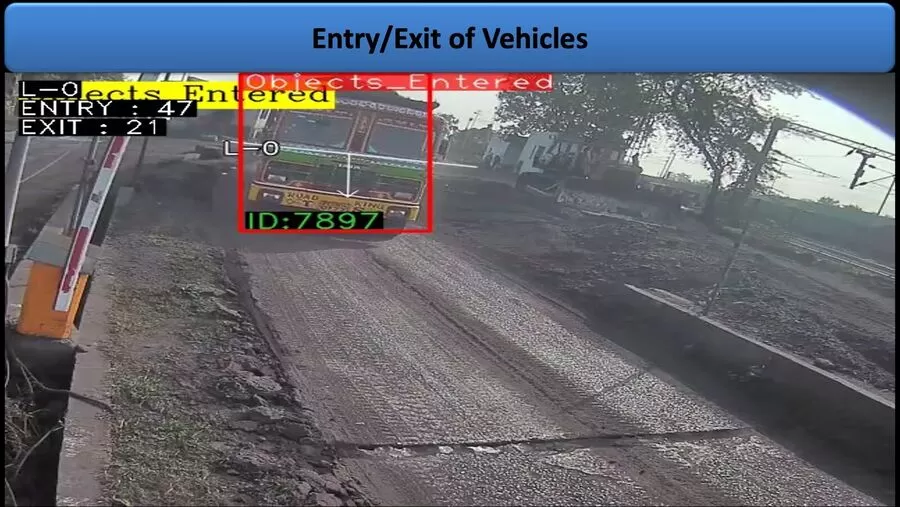 Ops · ANPR
Number Plate Recognition (ANPR)
Registration-plate capture at boom barriers, weighbridges, check-posts. Integrates with RFID and IVTS (GPS tracking) for unified vehicle movement log.
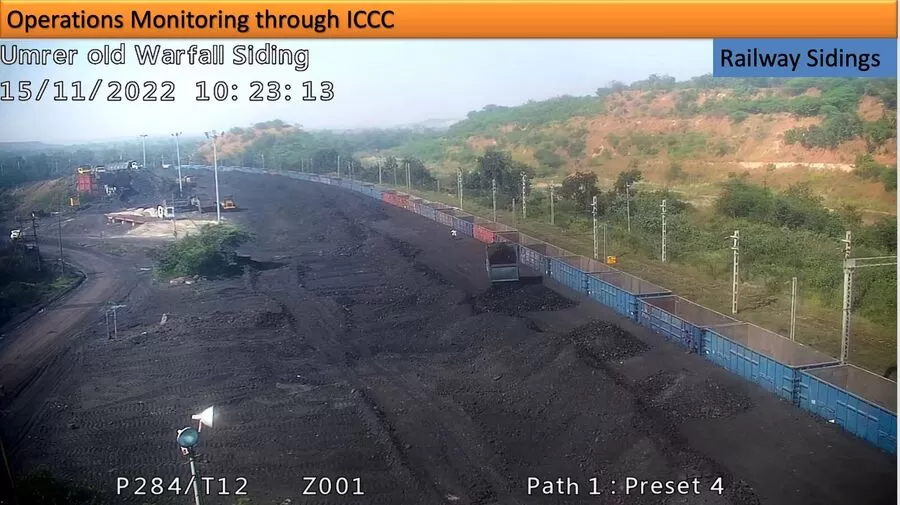 Ops · Classification
Vehicle Classification & Counting
Classifies cars, trucks, dumpers, tippers and two-wheelers across entry/exit zones. Zone-based flow counting for production-reporting dashboards. Supports directional count (in/out).
Video analytics in CCTV, step by step.
Analytics does not replace operators — it tells them where to look. The value comes from the whole chain, not the AI model alone.
Where AI video analytics pays off in Indian industry.
Use cases marked Live · SMIPL run today in SMIPL-built WCL and/or SECL command centres. The rest are common industry applications SMIPL can scope.
Mines and quarries
PPE compliance Live · SMIPL, zone intrusion at magazines and perimeters Live · SMIPL, loaded/empty truck state at tipping points Live · SMIPL, ANPR at gates and weighbridges Live · SMIPL, smoke and fire at stockyards and sidings Live · SMIPL, crowd at check-posts Live · SMIPL, idle-time at weighbridges Live · SMIPL.
Safety · Anti-pilferage · DispatchManufacturing plants
Helmet, vest and safety-gear compliance on the shop floor, restricted-zone entry near hazardous machines, smoke and fire in stores, and vehicle and visitor movement at gates.
Workplace safetyPower plants and substations
Perimeter and switchyard intrusion after hours, camera tampering alerts, PPE in operating areas, and vehicle logging at main gates.
Critical infrastructureWarehouses and logistics
ANPR-based gate logs, vehicle counting and dwell time at docks, wrong-way and wrong-parking alerts in yards.
Yard · Gate · DockCampuses and public areas
Crowd build-up, intrusion into closed areas at night, camera tampering, and vehicle entry and exit tracking.
Security · CrowdSite-specific events
Events no off-the-shelf model covers — for example loaded-state checks tied to weighbridge data — need analytics tuned to the site's cameras and operations.
Custom tuningWill your existing cameras work? Pixel density is the first test.
AI needs enough pixels on the target. The 2014 edition of the international standard IEC 62676-4 — still widely cited in tenders as "DORI" — gives four commonly used levels of detail, measured in pixels per metre at the target:
| Level (IEC 62676-4) | Pixel density | What you can tell | Typical analytics at this level |
|---|---|---|---|
| Detection | 25 px/m | Something or someone is present | Perimeter and zone intrusion, vehicle presence |
| Observation | 63 px/m | How many people are present, and characteristic details such as distinctive clothing | Crowd, vehicle classification, wrong-way movement |
| Recognition | 125 px/m | Recognise a known person or object with confidence | PPE such as helmets and vests (depends on distance) |
| Identification | 250 px/m | It is possible to identify an individual | Face-related use cases; ANPR needs a dedicated plate camera |
Fixed cameras for analytics
PTZ cameras that keep moving are poor for rule-based analytics. Use fixed cameras on the zones that matter and PTZ for operator follow-up.
Fixed vs PTZLight, angle and weather
IR or white light at night, cameras not facing the sun, and housings rated for dust and rain. Coal dust and haze need models tuned for those conditions.
Site conditionsONVIF and STQC
ONVIF-compliant cameras connect to most VMS and analytics platforms. For government and PSU projects, check STQC certification — see our STQC camera list guide.
CompatibilityPixel-density values: IEC 62676-4:2014, as published in Axis Communications' technical guidance on pixel density. These levels are defined for human operators, so the analytics column is indicative — always follow the pixel density specified by the analytics software for each use case. A 2025 edition of IEC 62676-4 introduces a new seven-level scale (20 to 1,500 px/m); check which edition your tender refers to.
Edge analytics vs server analytics — which to choose.
| Edge (in the camera, or an edge box on site) | Server (GPU servers at site or in the ICCC) | |
|---|---|---|
| Best for | A few standard analytics per camera, many small sites | Many analytics per camera, central command centres |
| Network load | Low — only events and clips travel | Higher on the local network; WAN load stays low if servers are at site, high if analytics run centrally |
| Flexibility | In-camera: limited to the camera's analytics apps; edge box: several models, limited by its compute | Several models per camera, easier to update and tune |
| Existing cameras | In-camera needs analytics-capable cameras; an edge box can use existing ONVIF cameras | Works with existing ONVIF cameras |
| Typical fit | Retail, small plants, remote gates | Mines, PSUs, multi-site ICCCs |
SMIPL's coal-sector ICCCs use GPU-accelerated analytics servers running up to five concurrent analytics models per camera. Many projects combine both approaches.
Edge to cloud.
Resilient by design.
Our architecture is federated — each site records locally for 30+ days, the central ICCC aggregates live feeds and analytics. Recording continues at site during WAN outages.
Edge Capture
ONVIF-compliant IP cameras — bullet, dome and PTZ — from Sparsh, CP Plus, Honeywell, Hanwha, Axis and others. Support for existing brownfield camera integration.
Site NVR & Storage
64-channel NVRs with 80 TB surveillance-grade HDD at each operational area. Local 30-day retention. Recording continues locally during connectivity outages.
Analytics Compute
Dedicated video-analytical servers running concurrent models per stream. GPU-accelerated inference. Up to 5 analytics models per camera.
ICCC & API
Enterprise VMS + command software with video-wall, escalation matrix, event log, ATR workflow. API/SDK for integration with RFID, IVTS, weighbridge, dispatch and CIL dashboards.
Enterprise-grade by default.
Representative specifications from our standard deployment. All components scale with scope, from a single site to multi-Area deployments, without re-architecture.
Test it on your site before you buy at scale.
Demo videos always look perfect. These checks show how analytics will behave on your cameras, in your conditions.
Pilot on your cameras
Run each use case on a few real cameras for two to four weeks, including nights and bad weather.
Count true and false alerts
Measure correct alerts, missed events and false alarms per camera per day. False alarms decide whether operators trust the system.
Check integration
Alerts must arrive in your VMS or ICCC with snapshot, clip and camera location — not in a separate screen nobody opens.
Plan compute and storage
Size servers or edge devices for the number of cameras and analytics. Use the storage calculator for recording.
Write the SOP
Decide who acts on each alert, how fast, and how it is closed and reported.
Respect privacy law
Video of identifiable people is generally treated as personal data under India's Digital Personal Data Protection Act, 2023. Define the purpose, limit access and set retention periods — especially for face recognition.
When standard analytics are not enough, tune them to the site.
Off-the-shelf models are trained on generic scenes. Mines, plants and yards have their own vehicles, uniforms, dust, lighting and workflows. SMIPL tunes each analytics model for the operational context — thresholds are set from the field, not a datasheet.
1 · Define the event
What exactly must be detected, where and when — and what action follows.
Scope2 · Use site footage
Real footage from the site's own cameras across shifts, seasons and weather.
Data3 · Tune and correlate
Adjust zones, thresholds and models, and link with RFID, GPS or weighbridge data to confirm events.
Tuning4 · Monitor and improve
Track false alarms and missed events after go-live and keep improving under the maintenance contract.
O&MIndia's first AI-enabled ICCC for the coal sector — built by SMIPL.
The same capability stack described on this page powers live operations at Western Coalfields Limited and South Eastern Coalfields Limited — covering the world's 2nd and 3rd largest coal mines, with 1,300+ cameras across both command centres and ten analytics event types in live operation.
Read the Full Case Study →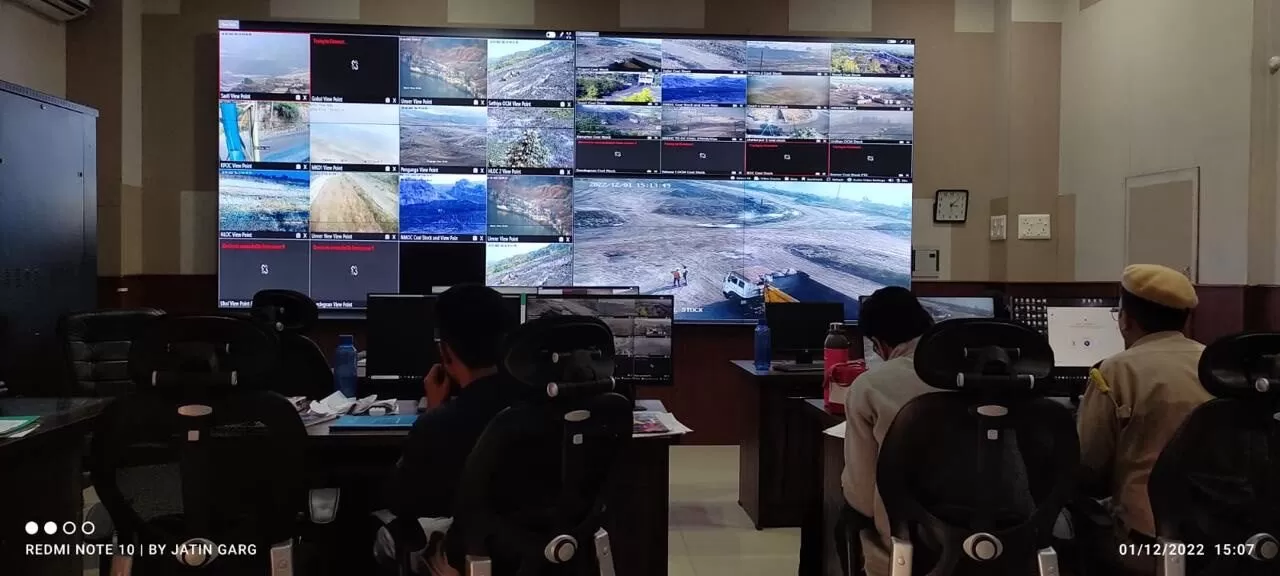
AI video analytics questions buyers actually ask.
What is video analytics in CCTV?
Video analytics is software that analyses camera feeds automatically and raises an alert when a defined event happens — such as an intrusion, a missing helmet, smoke or an unknown vehicle — so operators can act instead of watching every screen.
Which AI video analytics are most useful for industry?
The most widely used are PPE compliance, zone intrusion, fire and smoke detection, ANPR at gates, vehicle counting and classification, camera tampering alerts and crowd detection. Mines and dispatch yards also use loaded or empty truck-state detection.
Can AI analytics run on my existing CCTV cameras?
Often yes, with server-based analytics, if the cameras are ONVIF-compliant IP cameras with enough pixel density on the area to be analysed. A short site assessment and pilot confirms which cameras qualify and where new cameras are needed.
How accurate is AI video analytics?
Accuracy depends on camera placement, lighting, weather and how well the model is tuned to the site. That is why a pilot on your own cameras, measuring correct alerts and false alarms, matters more than any brochure figure.
Does AI video analytics work at night and in dust?
Yes, with suitable cameras, IR or white-light illumination and models tuned for those conditions. For example, SMIPL's smoke-detection models are trained on dust-heavy coalfield footage to reduce false alarms from haze and vehicle emissions.
Is face recognition allowed in workplaces in India?
Video of identifiable people is generally treated as personal data under the Digital Personal Data Protection Act, 2023. Organisations should define a clear purpose, control access, limit retention and take legal advice before deploying face recognition.
What does AI video analytics cost?
Cost depends on the number of cameras, the number of analytics per camera, edge or server deployment, integration with the VMS or ICCC, and the maintenance period. Share your camera list and use cases for a costed proposal.
Does SMIPL provide AI video analytics?
Yes. SMIPL designs, deploys and operates AI video analytics with ten event types in live operation at the WCL and SECL command centres, and integrates analytics with ICCCs, RFID boom barriers, GPS tracking and weighbridges. See how an ICCC works and the WCL case study.
Want to know which analytics will work on your site? Send us your camera list.
Share your camera list, a few sample snapshots and the events you need to detect. SMIPL will tell you which cameras qualify, what a pilot looks like and what it takes to scale — anywhere in India.